What Is H R Block Extended Download Service
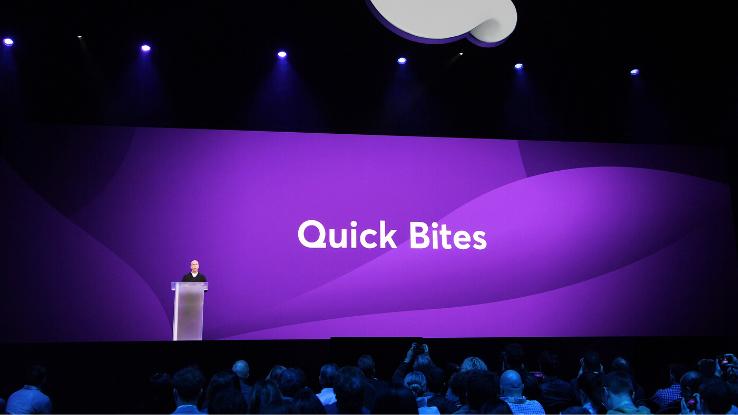
Quibi was a streaming service that launched on April 6th, 2020 only to close downwards in October that aforementioned year. Quibi was and so brusque-lived, that many of you probably haven't even heard of it until today. If you fall into that dislocated category, permit united states clear things up for you.
Founded in 2018 past former Walt Disney Studios chairman Jeffrey Katzenberg, Quibi was a streaming service led by CEO One thousand thousand Whitman — yep, of Hewlett Packard Enterprise fame. According to the folks at Quibi, the service was aimed at a younger demographic with its content existence delivered in the form of short, 10-infinitesimal episodes chosen "quick bites," hence the platform's goofy-sounding name. After raising $ane billion in funding from major investors like The Walt Disney Company, Sony Pictures, NBCUniversal, WarnerMedia and others, Quibi commissioned a slew of original content — viii,500 quick bites (or episodes) and over 175 shows — for its first year.
Months subsequently the muddled, star-packed Super Bowl 2020 ads, and amid the COVID-19 pandemic, Quibi was finally launched in April. Deadline reported that, in its first day, Quibi was installed by 300,000 users across Apple and Android devices, which isn't terrible, simply it too isn't Disney+'south four million launch-day installs. In fact, in its showtime week Quibi reached 1.seven million downloads, according to Whitman. The quirky platform's slow first would prove to be symptomatic of the platform's larger issues.
What Made Quibi Different?
Nigh video-streaming platforms try to optimize content then that it tin can be viewed on televisions, desktops, or mobile devices. Quibi, however, made the witting decision to produce its content specifically for mobile devices but. This meant that users could shift between horizontal and vertical video orientations. And, as we mentioned to a higher place, Quibi traded half-hour Telly episodes and two-hour films for shows delivered in "quick bite" chapters of 10 minutes or less.
Co-ordinate to a 2018 Vocalism article, 70% of Netflix users stream content on their televisions, leaving roughly 20% to computers and virtually 10% to mobile devices, like smartphones. Quibi wasn't trying to be Netflix or Hulu. Instead, information technology took cues from traditional net video sources, namely YouTube. Brandwatch reports that users collectively spotter over 1 billion hours of video on YouTube each twenty-four hours — more than Netflix and Facebook combined. Unlike Netflix, YouTube is primarily watched on mobile devices (seventy% of the fourth dimension) and the average session lasts upwards of 40 minutes. Needless to say, modeling your streaming platform off of both YouTube and Netflix's successes is a compelling proposition. Bite-sized, narrative-driven content that tin be watched in the palm of your hand sounds like the way of the futurity on paper, but, just like that metaphorical newspaper, Quibi leaned into past trends and not enough into the video platforms that are currently taking the (mobile) globe by storm.
Quibi debuted at a point when potential viewers had a lot of time on their easily only no one was particularly hard-pressed to detect content. In fact, there might accept been also much content to choose from. At the aforementioned time, we were all looking for a fiddling variety: Zoom presentations, alive-streamed concerts, and glory Instagram Alive videos became helpful ways to break up the monotony of narrative-driven streaming. In part, these platforms are appealing because they feel a scrap novel and because they're bite-size. Quibi, however, fumbled by taking more cues from the pre-cyberspace aureate age of television. Quibi's most straight competition was TikTok, a video-sharing platform that has wholly embraced internet culture every bit a way to create satisfying and addictive content.
On TikTok, users upload original content — what goes viral is crowd-vetted, not what Hollywood CEOs (or the CEOs of HP, for that thing) think audiences desire. Additionally, the pop app, which has around two billion downloads, thrives on users (or creators, really) interacting with one some other, sharing ideas, borrowing sound clips, and remixing (or memeing) content. "People record what they think would brand them and their friends laugh, surprised or enticed," TechCrunch says of TikTok. "The algorithm monitors what you're hovering over and speedily adapts its recommendations to your style."
On the other mitt, Quibi was unshareable: You couldn't take screenshots, which meant you couldn't hands share a dialogue (meme-based or otherwise) around the quick-seize with teeth shows with friends or the larger net audition. Unlike a new release on Netflix, which might see users creating viral, memed content around it, Quibi just didn't brand that sort of oversupply-vetted, crowd-sourced content like shooting fish in a barrel. Despite being designed for mobile viewing, Quibi eschewed whatever impact-screen interactivity and instead attempted to create slow-burn down dramas in small chunks. In an era where we tin easily picture show through TikTok and Instagram videos until ane hits us the right way, this approach to brusk-class content was doomed.
Not only did Quibi's distinct lack of interactivity pose a problem for its content's longevity, but information technology also posed a problem for what viewers wanted among the COVID-19 pandemic. With social distancing and shelter-in-place directives in consequence, folks were looking for ways to virtually connect with friends and family now more always.
From online gaming to Zoom happy hours, at that place are plenty of workarounds, and, when it comes to streaming Television and movies, the Google Chrome extension called "Netflix Party" allows users to sync Netflix content with friends' devices, ensuring that anybody is watching the same stream at the same time. Ameliorate notwithstanding, it includes an AIM-style conversation feature. Quibi, despite beingness catered to phones, didn't take anything like that, which made information technology a solitary platform in a time when folks aren't really seeking out more lonely time.
Okay, so what about the actual content that was on Quibi? Well, it was striking or miss, according to early on reviewers. Again, Quibi tried to marry prestige-drama production values with YouTube-style content. Sometimes it worked; Reese Witherspoon narratedTrigger-happy Queens, a bear witness well-nigh how the female creatures of the beast world battle for dominance and survival; in Memory Hole, Will Arnett ran through popular civilisation disasters from decades by; and, cheers to NightGowns, you could spotter fantastic Sasha Velour-helmed elevate performances on your phone.
But these mildly entertaining shows were outweighed by the not-so-peachy. Viewers could check out the "meh" quick bites, similar Chrissy Teigen's Chrissy's Court, which saw her equally a judge presiding over downright ridiculous cases, as well as the downright terrible shows, which includedMurder House Flip, a somehow-tiresome truthful-criminal offence-meets-habitation-renovation show, and When the Street Lights Go On, a drama about a dead teen daughter that Vulture reviewer Kathryn VanArendonk says is "made so poorly that I was occasionally envious of [the dead woman]."
Quibi's mixed bag of content wasn't lost to the ether when the platform shut down in October. Roku purchased Quibi's content library and began streaming select shows on May 20th, 2021. If you want to check out the good, the bad, and the ugly of Quibi's catalog, Roku is your best bet.
DOWNLOAD HERE
Posted by: danielsonvermis47.blogspot.com
Post a Comment